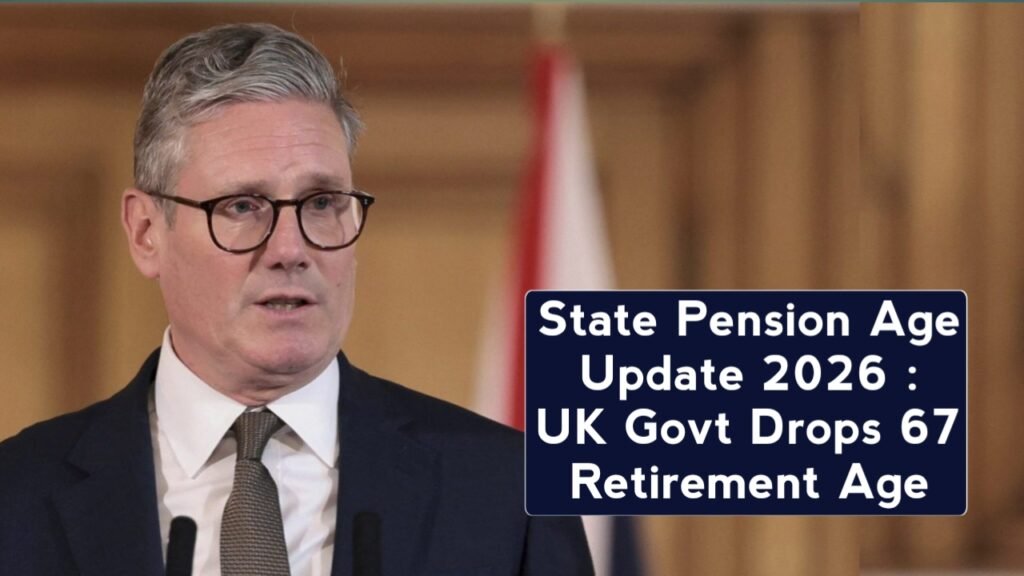
Hello Everyone, For years, the idea of the State Pension Age rising to 67 caused anxiety for millions across the UK. Many workers felt they were being asked to stay in employment longer without enough support for health or job security. In early 2026, the government confirmed a major change that has surprised both experts and the public. The planned increase to 67 has been paused and effectively dropped for now. This decision has important implications for current workers, retirees, and future pension planning across Britain.
Background of State Pension Age
The State Pension Age in the UK has gradually increased over the last two decades. Originally set at 65 for men and 60 for women, it was later equalised and then raised to 66 for everyone. The plan was to move it to 67 between 2026 and 2028. However, rising concerns about life expectancy trends, cost of living pressures, and fairness led the government to review this policy again before full implementation.
Why the Government Changed Its Decision
One of the main reasons behind dropping the 67 retirement age is the change in life expectancy patterns. Recent data shows that life expectancy growth has slowed compared to earlier decades. This means people are not necessarily living much longer than before. The government also faced strong public pressure, especially from workers in physically demanding jobs who argued that working longer was unrealistic and damaging to health and wellbeing.
Economic and Social Pressures
The UK economy in recent years has been under strain from inflation, energy costs, and rising housing expenses. Many older workers struggle to remain employed due to health conditions or lack of suitable roles. Extending the retirement age would have increased the number of people relying on benefits instead of pensions. By keeping the retirement age at 66, the government aims to reduce financial hardship and provide a more stable income source for older citizens.

What the 2026 Update Means in Practice
In practical terms, this update means that most people born after 1960 will still be eligible for their State Pension at 66, rather than 67. This provides clarity and relief for millions who were uncertain about their retirement timeline. It also allows individuals to plan their finances with more confidence, especially those close to retirement who were worried about having to work an extra year unexpectedly. Key Points of the Policy Change
- The scheduled rise to 67 between 2026 and 2028 has been halted.
- The current State Pension Age remains at 66 for both men and women.
- A future review may still consider changes, but no fixed date has been confirmed.
- The decision reflects economic realities and public feedback.
Impact on Current Workers
For people in their 40s and 50s, this decision brings a sense of security. Many had already started adjusting savings plans to cover an extra working year. Now, those plans can be relaxed slightly, though experts still advise personal savings. The change does not mean early retirement is easy, but it removes one layer of uncertainty that was causing stress for families across the UK.
How It Affects Future Generations
Younger workers should not assume the retirement age will stay the same forever. While the 67 increase has been dropped for now, future governments may revisit the issue. Demographic changes, healthcare costs, and economic growth will all influence future decisions. This means people in their 20s and 30s should still plan for a flexible retirement age and avoid relying solely on the State Pension.
Financial Planning After the Update
Even with the retirement age staying at 66, financial planning remains essential. The State Pension alone is rarely enough for a comfortable lifestyle. Private pensions, workplace schemes, and personal savings are still crucial. This update should be seen as a safety net improvement rather than a complete solution. Individuals should use this opportunity to review their pension statements and consider long-term goals more carefully.
Public Reaction Across the UK
Public reaction has been largely positive. Trade unions welcomed the decision, calling it fairer for low-income and manual workers. Many charities supporting older people also praised the move, highlighting the link between health inequality and longer working lives. However, some economists argue that the policy may increase pressure on public finances in the long run, especially as the population continues to age. Advantages of Keeping Retirement at 66
- Reduces financial pressure on older workers with health issues.
- Provides stability and clarity for retirement planning.
- Helps prevent increased reliance on unemployment or disability benefits.
- Improves overall wellbeing and work-life balance for seniors.
Government’s Long-Term Strategy
The government has stated that it will continue to review the State Pension Age every few years. These reviews will consider life expectancy, economic performance, and public health. Instead of fixed automatic increases, future changes may be more gradual and flexible. This approach aims to balance financial sustainability with social responsibility, ensuring that people are not forced into unrealistic working conditions.
Comparison with Other Countries
Compared to many European nations, the UK retirement age remains relatively moderate. Some countries have already pushed retirement to 67 or even higher. However, the UK has stronger public opposition to such changes, largely due to income inequality and job market conditions. The 2026 decision places the UK in a more socially cautious position, prioritising fairness over aggressive cost-cutting.
What Experts Are Saying
Pension experts generally see this update as a temporary relief rather than a permanent fix. They stress that the ageing population will continue to challenge public finances. While dropping the 67 age helps in the short term, long-term reforms in taxation, healthcare, and employment will still be necessary. Experts advise individuals not to depend entirely on government policies when planning retirement.
Conclusion
The 2026 State Pension Age update marks an important moment in UK social policy. By dropping the planned increase to 67, the government has responded to economic realities and public concern. For millions, this brings clarity, relief, and better retirement planning. However, it does not remove the need for personal savings and financial awareness. The decision reflects a balance between sustainability and social fairness, offering stability in uncertain times.
Disclaimer: This article is for general informational purposes only and does not constitute financial or legal advice. Pension rules and government policies may change in the future. Readers are advised to consult official UK government sources or a qualified financial advisor before making any retirement or financial decisions.