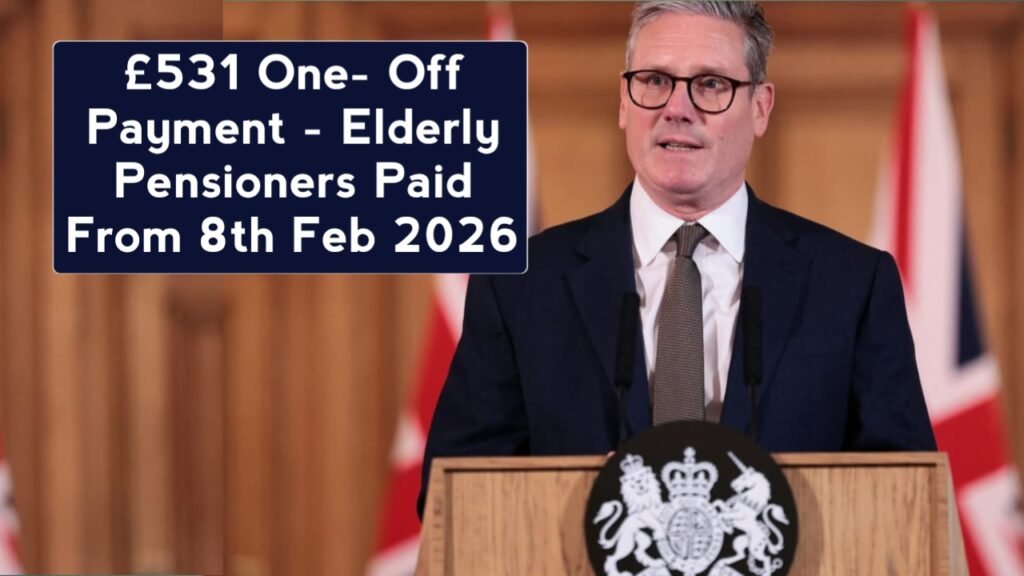
Hello Everyone, The Department for Work and Pensions (DWP) has officially confirmed a £531 one-off support payment for elderly pensioners, with payments set to start from 8 February 2026. This announcement has come as a welcome relief for thousands of older people across the UK who are continuing to struggle with the rising cost of living. Increasing energy bills, food prices, and essential household expenses have placed significant pressure on pensioner households, especially those relying on fixed incomes.
This payment forms part of the government’s wider cost-of-living support strategy aimed at protecting the most vulnerable members of society. Importantly, the £531 payment is non-repayable, tax-free, and will be paid automatically, meaning eligible pensioners do not need to submit any application.
Why the £531 One-Off Payment Has Been Introduced
The introduction of the £531 payment reflects ongoing concerns about the financial strain faced by elderly households. While inflation has shown signs of slowing, the overall cost of essential goods and services remains significantly higher than in previous years. Pensioners, particularly those dependent on state benefits, have been disproportionately affected.
Heating costs during winter months, rising food prices, medical expenses, and council tax bills have all contributed to increased financial pressure. The government has acknowledged that older pensioners often have limited ability to increase their income, making targeted financial assistance essential. This payment is intended to provide short-term relief during the winter period, when expenses are typically at their highest.

Who Is Classified as an Elderly Pensioner for This Payment
For the purposes of this payment, elderly pensioners generally include individuals who have reached State Pension age and are receiving specific income-related benefits. The DWP has made it clear that eligibility is determined by benefit entitlement, not simply by age.
This approach ensures that financial support reaches pensioners who need it most, rather than being distributed universally to all pensioners regardless of income level. Both men and women who meet the qualifying criteria under current UK pension and benefit rules may be included.
Benefits That May Make You Eligible
Eligibility for the £531 one-off payment is primarily linked to whether a pensioner receives certain qualifying benefits. These benefits are designed to support older people with lower incomes or additional financial needs. If you were receiving one of the following benefits during the DWP’s qualifying period, you may be eligible:
- Pension Credit (Guarantee Credit or Savings Credit)
- Income-related Employment and Support Allowance (ESA)
- Income Support
- Income-based Jobseeker’s Allowance (JSA)
If you were entitled to any of these benefits during the qualifying window, the payment should be issued automatically without the need for any action on your part.
Payment Start Date and How the Money Will Be Paid
The DWP has confirmed that payments will begin from 8 February 2026. Eligible pensioners will receive the £531 directly into their bank accounts, using the same details already held by the DWP for benefit payments.
The payment will appear on bank statements with a clear reference indicating that it is a DWP support or cost-of-living payment. It is important to note that not all payments will arrive on the same day. Payments are usually staggered over several weeks, so some pensioners may receive the money slightly later than others.
Is an Application Required for the £531 Payment?
No application is required. One of the key advantages of this support measure is that it is fully automatic. The DWP will use existing benefit records to identify eligible pensioners and issue payments accordingly.
To avoid delays, pensioners should ensure their bank details and personal information held by the DWP are up to date. It is also important to remain vigilant against scams. The DWP will never ask for personal or banking information via text messages, emails, or unsolicited phone calls regarding this payment.
Will the £531 Payment Affect Other Benefits?
The DWP has confirmed that this one-off payment will not affect existing benefits. It will not be treated as taxable income and will not reduce entitlement to other benefits. Additionally, it will be ignored for benefit cap calculations and savings assessments for a set period.
This ensures pensioners can use the full £531 amount to meet essential needs without worrying about future reductions to their benefit payments or reassessments of their financial situation.
How Pensioners Are Likely to Use the Payment
While there are no restrictions on how the money can be spent, many pensioners are expected to use the £531 to cover essential living costs. The timing of the payment makes it especially useful for managing winter heating and energy bills.
Others may choose to spend the money on groceries, prescription costs, mobility aids, or outstanding household expenses. The flexibility of this payment allows pensioners to prioritise their most urgent needs during a challenging financial period.
Comparison With Previous Cost-of-Living Support
This £531 payment follows several cost-of-living support schemes introduced in recent years. Earlier payments varied in amount and eligibility, but this new payment is more specifically targeted at elderly pensioners receiving income-related benefits.
The higher value of £531 reflects recognition of the unique financial pressures faced by older households. It also works alongside other support measures such as Winter Fuel Payments, Council Tax reductions, and local authority assistance schemes.
What to Do If You Do Not Receive the Payment
If you believe you are eligible but have not received the payment by the end of February 2026, there is no need to panic. Delays can sometimes occur due to outdated bank details or administrative issues. If the payment is missing, consider taking the following steps:
- Check your bank statements carefully for a DWP reference
- Review recent benefit award letters
- Contact the DWP using official GOV.UK contact details
- Avoid third-party services or unsolicited offers claiming to help recover the payment
Using official channels is the safest and most reliable way to resolve any payment issues.
Staying Informed About DWP Updates
The DWP regularly publishes updates about benefit payments and support schemes through official government channels. Pensioners and their families are encouraged to check GOV.UK for the latest information or seek advice from recognised support organisations.
Staying informed helps prevent confusion, avoids misinformation, and ensures eligible individuals receive the support they are entitled to. Advice services can also help pensioners understand how this payment fits into their overall financial planning.
Impact of the £531 Payment on Elderly Households
For many elderly households, the £531 payment represents more than just financial assistance. It provides reassurance and peace of mind during a time of ongoing economic uncertainty. Charities supporting older people have welcomed the announcement, highlighting the importance of targeted support.
Although it does not address long-term income challenges, this payment offers timely relief and acknowledges the real-world pressures faced by pensioners across the UK.
Conclusion
The DWP’s £531 one-off payment starting from 8 February 2026 is a meaningful support measure for elderly pensioners. With automatic payments, clear eligibility rules, and no impact on existing benefits, it offers practical help at a critical time. Pensioners are advised to keep their details updated and remain alert to official announcements. This payment underlines the government’s continued efforts to support older people during ongoing cost-of-living challenges.
Disclaimer: This article is for informational purposes only and is based on publicly available information at the time of writing. Payment rules, eligibility criteria, and dates may change. Readers should always consult official GOV.UK guidance or contact the Department for Work and Pensions directly for the most accurate and up-to-date information.