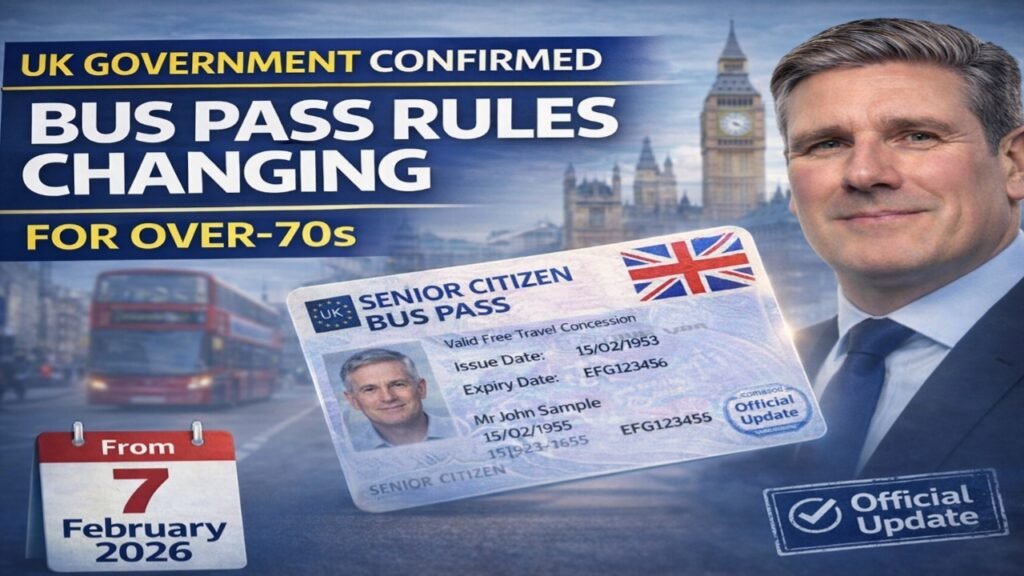
Hello Everyone, The UK Government has officially confirmed new bus pass rules for people aged over 70, set to begin from 7th February 2026. This update has drawn strong attention across the country, especially among pensioners who rely on free or subsidised public transport for daily life. Bus passes are more than a travel benefit; for many older residents, they are a lifeline to independence, healthcare, and social connection. The changes aim to modernise the scheme while managing rising costs faced by local councils and transport authorities.
Why the Rules Are Changing
The government has stated that the bus pass system needs updating to reflect changing travel patterns and budget pressures. Over the last decade, demand for concessionary travel has increased steadily, particularly among people over 70 who travel more frequently during off-peak hours. Local authorities have raised concerns about funding gaps, prompting a review of eligibility and usage rules. The new framework is designed to balance financial sustainability with fairness, ensuring that older citizens continue to receive meaningful support without placing excessive strain on public transport services.
Who Will Be Affected
These new rules apply specifically to residents aged 70 and above who currently hold or plan to apply for an older person’s bus pass. Existing pass holders will not lose access overnight, but they may notice changes in how and when their pass can be used. The government has emphasised that the policy is UK-wide, although some local councils may apply additional conditions. Anyone approaching their 70th birthday in 2026 should also be aware of the updated application process and revised usage terms.
Key Changes at a Glance
Under the revised policy, the core benefit of free bus travel remains in place, but with clearer limits. The focus is on off-peak travel and better alignment with local transport capacity. Authorities believe this approach protects essential travel while reducing overcrowding during peak hours. Importantly, no action is required immediately from current pass holders unless contacted by their local council. Official letters and online notices will be issued well before the February start date to explain individual responsibilities.

Main Updates You Should Know
The government has highlighted several practical adjustments that over-70s should understand before the rules take effect. These are not intended to remove benefits, but to standardise how the scheme operates across regions.
- Free travel will remain mainly during off-peak hours, with clearer time windows
- Local councils may introduce digital verification alongside physical passes
- Replacement rules for lost or damaged passes will become stricter
These updates are meant to improve consistency and reduce misuse, according to officials.
How the New Rules Affect Daily Travel
For most older people, day-to-day travel will continue as usual. Shopping trips, medical appointments, and social visits during off-peak hours are still covered. However, some early-morning or late-afternoon journeys may no longer qualify for free travel in certain areas. This could affect those who prefer travelling before peak congestion. The government advises checking local council guidance to avoid confusion. Transport providers will display updated signage to help passengers understand when passes are valid.
Application and Renewal Process
Anyone applying for a new over-70 bus pass after February 2026 will follow a slightly revised process. Proof of age and residency will remain mandatory, but some councils may encourage online applications to speed up approvals. Renewal reminders will be sent earlier than before to prevent gaps in entitlement. While the process may feel more formal, officials say it will reduce delays and errors. Support will still be available for applicants who are not confident using digital services.
What Remains the Same
Despite widespread concern, several important aspects of the scheme are unchanged. The government has been clear that it does not want older citizens to feel isolated or restricted.
- Free local bus travel remains a legal entitlement for eligible over-70s
- Passes will still be recognised across most regions in England
- Travel for essential purposes is still strongly protected
These assurances are intended to calm fears and reinforce the scheme’s long-term future.
Reaction from Pensioners and Councils
Public reaction has been mixed. Some pensioners welcome clearer rules, saying it reduces uncertainty when travelling between regions. Others worry that tighter time restrictions could limit flexibility, especially for medical appointments. Local councils, meanwhile, have largely supported the changes, arguing that consistent national guidance helps them manage budgets more responsibly. Charities representing older people have called for close monitoring to ensure vulnerable individuals are not unintentionally disadvantaged by the new framework.
What You Should Do Now
Although the rules do not start until February 2026, it is wise to stay informed. Check your local council website regularly and read any official letters carefully. If you rely heavily on early-morning travel, consider planning alternatives or seeking clarification from your transport provider. Family members may also want to help older relatives understand the changes. Being prepared well in advance will help avoid unnecessary stress once the new rules officially begin.
Conclusion
The new UK bus pass rules for over-70s, starting on 7th February 2026, represent a careful adjustment rather than a removal of benefits. While some usage conditions are becoming clearer and slightly more restricted, the core promise of free off-peak travel remains intact. For most older residents, daily life will continue with minimal disruption. Staying informed and understanding local variations will be key to making the most of the scheme under the updated rules.
Disclaimer:This article is for informational purposes only and is based on publicly announced government updates. Bus pass rules may vary by local council and are subject to change. Readers are advised to check official UK government or local authority sources for the most accurate and up-to-date information before making travel or financial decisions.