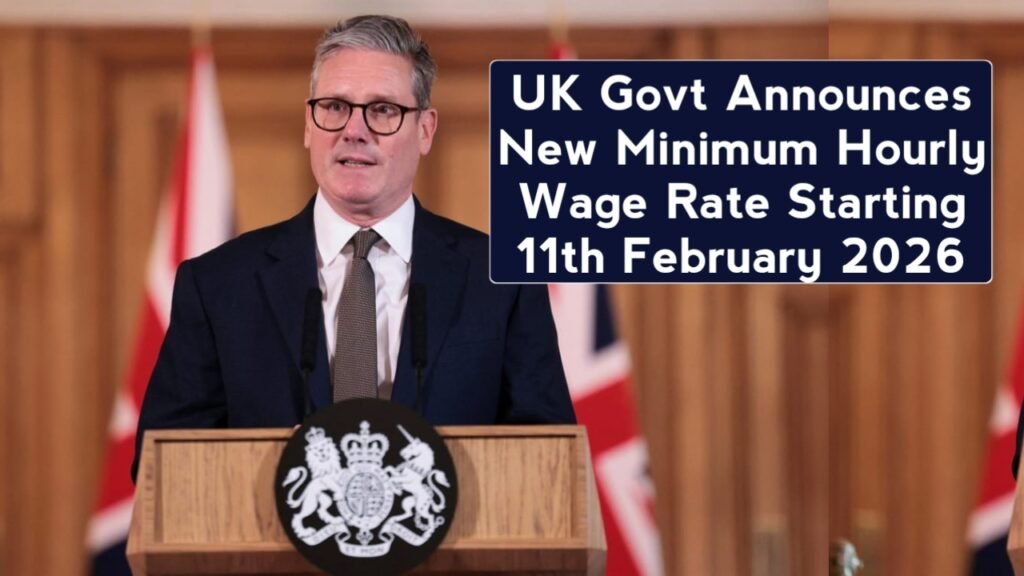
Hello Everyone, The UK Government has officially announced a new minimum hourly wage rate that will come into effect from 11th February 2026. This update is expected to impact millions of workers across England, Scotland, Wales, and Northern Ireland. Rising living costs, inflation pressure, and ongoing wage debates have pushed this decision into the spotlight. For low-income households and working families, this announcement brings both relief and questions. Employees and employers alike are now preparing for changes that could reshape monthly budgets, staffing plans, and overall workplace dynamics across the UK economy.
Why the Wage Change Matters
Minimum wage changes are never just numbers on paper. They directly affect real people trying to manage rent, food bills, transport, and energy costs. Over the past year, many UK workers have struggled to keep up with rising expenses despite working full-time. The new hourly rate is designed to provide fairer pay and support basic living standards. For the government, this move also signals a response to public pressure and economic realities, aiming to balance worker protection with business sustainability.
Official Start Date Explained
The government has confirmed that the revised minimum hourly wage will officially begin on 11th February 2026. Unlike previous updates that often start in April, this mid-February rollout has drawn attention. Employers must ensure payroll systems are updated in time to avoid underpayment issues. Workers should check payslips carefully from this date onwards. Any failure to comply may result in penalties, back payments, and enforcement action by HMRC, which continues to monitor wage compliance closely.
Who Will Benefit Most
The biggest beneficiaries of this wage increase will be workers currently earning at or near the minimum threshold. This includes employees in retail, hospitality, care services, cleaning, and entry-level roles. Younger workers and part-time staff are also expected to see noticeable improvements in weekly income. For many households, even a small hourly increase can make a meaningful difference over a month. The government believes this change will support financial stability and reduce in-work poverty across the UK.

New Wage Rate Overview
While the government has not framed this as a dramatic overhaul, the adjustment is still significant for everyday workers. Key points include:
- Higher hourly pay for eligible workers across the UK
- Legal requirement for employers to comply from 11th February 2026
- Applies to both full-time and part-time roles
- Aimed at supporting cost-of-living pressures
These points highlight why this announcement has gained national attention and why workers should stay informed.
Impact on Employers
For businesses, especially small and medium-sized enterprises, the new minimum wage rate brings both responsibility and challenge. Employers must reassess staffing budgets, pricing strategies, and operational costs. While larger companies may absorb the increase more easily, smaller firms could feel pressure. However, higher wages can also lead to improved staff retention, motivation, and productivity. The government has encouraged employers to plan early, review contracts, and communicate clearly with staff to ensure a smooth transition.
Living Cost Context
This wage update cannot be separated from the wider cost-of-living situation in the UK. Energy bills, rent, council tax, and food prices have all risen sharply. Many workers report that previous wage levels simply did not stretch far enough. By increasing the minimum hourly rate, the government aims to ease some of this pressure. While it may not solve every financial challenge, it represents a step towards better income security for low-paid workers across the country.
Official Update: New Bank Withdrawal Rules for All UK Pensioners Begin 10th February 2026
Regional Consistency Across the UK
One important aspect of the announcement is that the new minimum wage rate applies uniformly across the UK. Whether a worker is based in London, Manchester, Cardiff, or Belfast, the legal minimum remains the same. This consistency helps avoid confusion and ensures fairness. However, differences in local living costs mean the real-world impact may vary. For workers in high-cost areas, the increase may feel modest, while others may experience more noticeable relief.
Worker Rights and Protection
UK workers are protected by law when it comes to minimum wage compliance. If an employer fails to pay the correct rate from 11th February 2026, employees have the right to raise concerns. HMRC has the authority to investigate complaints and enforce penalties. Workers can also seek advice from ACAS or Citizens Advice. Understanding these rights is essential, as underpayment remains a concern in some sectors despite clear legal requirements.
How Employees Should Prepare
Workers are encouraged to stay proactive ahead of the new wage start date. Helpful steps include:
- Checking current hourly pay against the new legal rate
- Reviewing payslips after 11th February 2026
- Speaking to employers if discrepancies appear
- Keeping records of hours worked
These actions can help ensure employees receive the pay they are legally entitled to without unnecessary stress.
Economic Outlook
From an economic perspective, higher minimum wages can stimulate spending, as lower-income workers are more likely to spend extra earnings locally. This can support local businesses and communities. However, economists also caution about inflationary risks and cost pressures on employers. The government maintains that the new rate has been carefully assessed to strike a balance between fair pay and economic stability, reflecting recommendations from independent wage advisory bodies.
Public Reaction So Far
Public reaction to the announcement has been mixed but largely positive. Many workers welcome the increase as long overdue, while some employers express concern about rising costs. Trade unions have broadly supported the move but argue that wages must continue to keep pace with inflation. Online discussions show that people are eager for clarity on exact rates and eligibility. Overall, the announcement has sparked renewed debate about fair pay and living standards in the UK.
What Happens Next
As the start date approaches, further guidance is expected from official government channels. Employers will receive compliance reminders, and workers will be encouraged to understand their rights. This period is crucial for preparation, communication, and adjustment. The success of the new minimum wage rate will depend not only on legislation but also on effective enforcement and cooperation between employers and employees across the UK workforce.
Conclusion
The UK Government’s decision to introduce a new minimum hourly wage from 11th February 2026 marks an important moment for workers and businesses alike. While it may not resolve all cost-of-living challenges, it represents a meaningful step towards fairer pay. With proper preparation, clear communication, and awareness of rights, this change has the potential to positively impact millions of lives across the UK.
Disclaimer: This article is for informational purposes only and is based on publicly available announcements and general guidance. Wage rates, eligibility rules, and enforcement practices may change. Readers should always refer to official UK Government sources or seek professional advice for the most accurate and up-to-date information regarding minimum wage regulations.