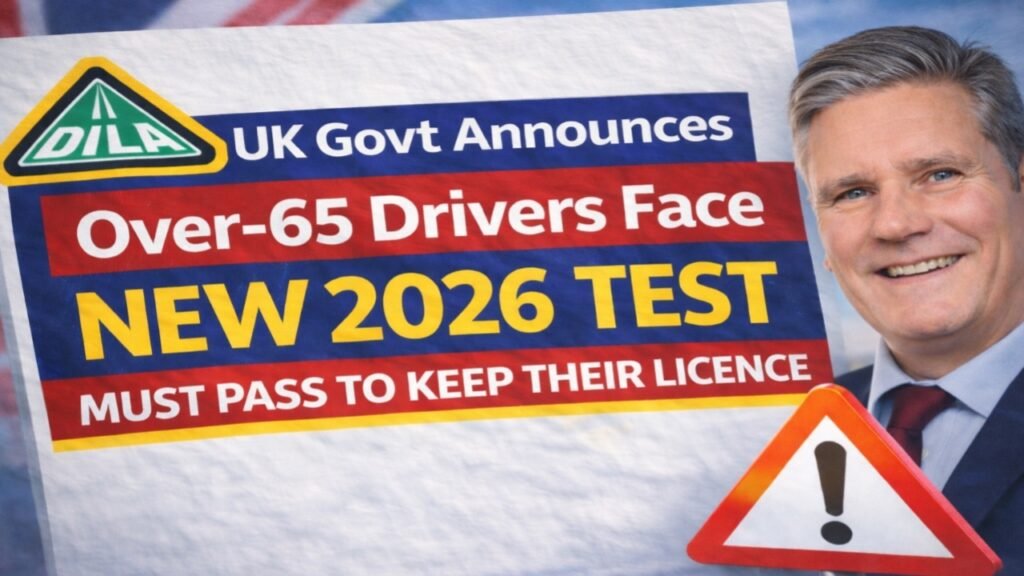
Hello Everyone, The UK Government has announced a major update that could affect millions of older motorists across the country. From 2026, drivers aged 65 and above may be required to pass a new driving-related test in order to keep their licence valid. The move is being discussed as part of wider road safety reforms and has already sparked strong reactions. While officials say the aim is to improve safety for everyone, many older drivers are worried about what this could mean for their independence and day-to-day mobility.
Why the Rule Is Being Introduced
Road safety data in the UK has shown a steady rise in the number of older drivers on the road. With people living longer and staying active, more drivers are continuing well beyond retirement age. The government believes current self-declaration rules may no longer be enough to ensure safety. Officials argue that modern traffic conditions, faster vehicles, and complex road layouts demand sharper awareness, making periodic checks necessary to protect both older drivers and other road users.
Who Will Be Affected
The proposed rule is expected to apply to drivers aged 65 and above, although final age thresholds are still under discussion. It will cover holders of standard UK car licences and may also extend to certain commercial licence holders. Drivers who already renew their licences at 70 are particularly likely to fall under the new system. Younger drivers will not be affected, and no changes are expected for those under the stated age limit.
What the New Test May Include
While the final structure has not been officially published, early reports suggest the test will not be a full retake of the driving test. Instead, it is expected to focus on fitness to drive, reaction times, and general awareness. The government has stressed that the process should be fair and proportionate, ensuring capable drivers are not forced off the road unnecessarily. The emphasis is expected to be on ability rather than age alone.

Key Checks Being Considered
Under current proposals, the government is reviewing several assessment areas. These checks are designed to reflect real-world driving rather than test-centre pressure.
- Basic eyesight and vision clarity checks
- Reaction time and hazard awareness assessment
- Updated Highway Code understanding
- Medical fitness confirmation if required
These checks aim to confirm that older drivers can continue driving safely without unnecessary barriers.
How Often the Test Will Be Required
At present, UK drivers must renew their licence at age 70 and every three years thereafter. Under the new proposal, the assessment could align with this renewal cycle or be required at longer intervals, such as every five years. Ministers have indicated they want to avoid excessive testing while still ensuring safety. The final frequency will likely depend on consultation feedback from drivers, safety groups, and motoring organisations.
Government’s Official Position
The Department for Transport has stated that the policy is not intended to punish older drivers. Instead, it is being framed as a preventative safety measure. Officials point out that many older motorists are safe, experienced, and responsible drivers. However, the government argues that age-related changes can occur gradually and often go unnoticed. Regular checks are seen as a way to identify issues early rather than after a serious accident occurs.
Concerns Raised by Drivers
Many over-65 drivers have expressed concern about losing their independence. In rural parts of the UK, driving is often essential for accessing shops, healthcare, and social activities. Critics argue that mandatory testing could unfairly target older people who have decades of safe driving experience. There are also worries about cost, accessibility of testing centres, and potential delays. Campaign groups are calling for safeguards to ensure the process remains fair and supportive.
Support Available for Older Drivers
To ease concerns, the government is considering additional support measures. These may include refresher courses, online learning tools, and guidance sessions designed to help drivers prepare. The aim is to help drivers stay on the road safely for as long as possible rather than removing licences abruptly. Motoring organisations are also expected to play a role in offering advice and reassurance throughout the transition period.
Possible Exemptions
Not every driver over 65 may be required to take the test in the same way. Exemptions or simplified assessments could be offered to drivers with clean driving records or recent medical clearance. The government has hinted that a risk-based approach may be used. This would ensure that drivers with no history of accidents or violations are not treated the same as higher-risk cases.
What Happens If a Driver Fails
Failing the assessment would not automatically mean a permanent ban. In many cases, drivers may be offered the chance to retake the test after additional training or medical review. Temporary licence restrictions could also be considered. The government has emphasised that the goal is correction, not punishment. Only drivers deemed unsafe after multiple reviews would face licence withdrawal.
Steps Drivers Should Take Now
Although the rule is planned for 2026, older drivers are encouraged to prepare early. Staying updated with the Highway Code, having regular eye tests, and maintaining overall health can make a significant difference. Simple steps such as driving during daylight hours and avoiding high-stress routes can also help. Being proactive now may reduce stress when the new system officially comes into force.
Benefits Highlighted by Authorities
Supporters of the policy argue it could lead to safer roads for everyone. Early identification of issues may prevent serious accidents and improve confidence among older drivers who pass the checks. Insurance providers may also view successful assessments positively. Authorities believe the long-term benefits could include fewer collisions, reduced healthcare costs, and improved public trust in road safety measures.
What Happens Next
The proposal is still subject to consultation and possible amendments. Public feedback will play a key role in shaping the final version of the rule. The government is expected to release clearer guidance closer to implementation. Until then, drivers are advised to follow official updates and avoid misinformation circulating online. Any confirmed changes will be announced well in advance to allow sufficient preparation time.
Conclusion
The proposed 2026 driving test for over-65s marks a significant shift in UK road safety policy. While it has raised concerns, the government insists the aim is protection rather than restriction. With fair implementation, proper support, and clear communication, the change could help older drivers remain safe and confident on the road while protecting other road users across the UK.
Disclaimer: This article is for informational purposes only and is based on publicly discussed proposals and early reports. Driving licence rules, tests, and eligibility criteria may change following official government consultations. Readers are advised to check updates directly from the UK Government or DVLA for the most accurate and current information before making any decisions.